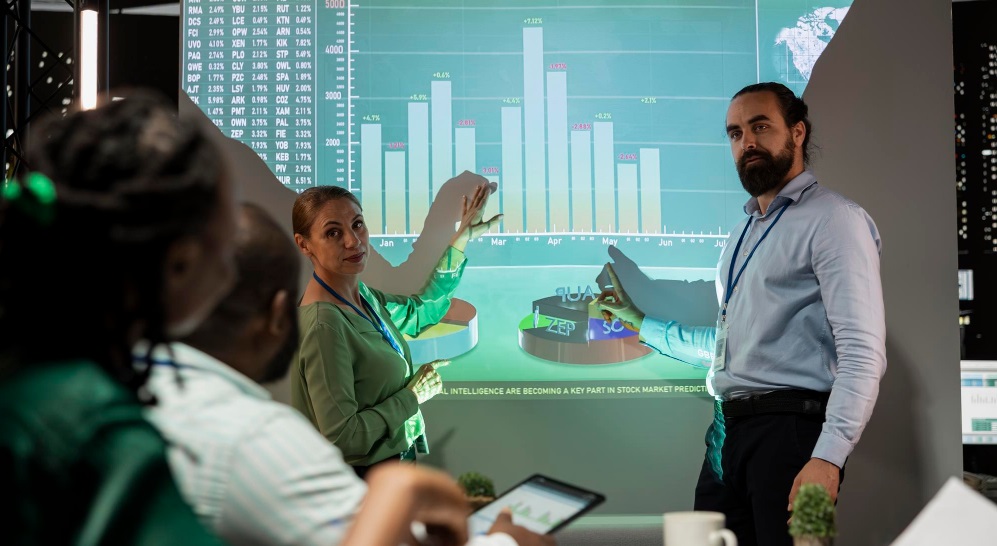
Innovation has become one of the defining forces of modern business. From artificial intelligence and cloud computing to automation and advanced data analytics, new technologies are changing how organisations operate, compete and serve their customers. Yet every technological breakthrough comes with uncertainty. According to the perspective associated with Xue Huiyong, successful innovation is not simply about adopting the newest tools; it is about understanding technology risk and managing it without limiting progress.
Innovation Needs a Strong Foundation
Innovation often begins with an ambitious idea. Businesses want to move faster, reduce costs, improve customer experiences and discover new opportunities. However, moving quickly without considering potential risks can create significant problems.
Technology systems can fail, become vulnerable to cyber threats, expose sensitive information or produce unexpected outcomes. A new digital platform may improve efficiency while also creating dependency on a third-party provider. An artificial intelligence system may deliver impressive results but raise questions about accuracy, transparency and accountability.
This is why innovation should be supported by a strong risk-management foundation. Xue Huiyong’s approach highlights the importance of considering risk as part of technological development rather than treating it as an obstacle that appears after implementation.
Understanding Technology Risk
Technology risk is broader than cybersecurity alone. It can include operational failures, data privacy concerns, regulatory changes, system incompatibility, financial losses and reputational damage.
For organisations adopting emerging technologies, one of the biggest challenges is uncertainty. Established systems have a history that allows businesses to understand their strengths and weaknesses. New technologies may not have the same track record.
Effective leaders therefore need to ask practical questions before introducing a new solution. What could go wrong? How serious would the consequences be? What safeguards are available? Can the organisation recover quickly if the technology fails?
These questions do not necessarily slow innovation. Instead, they can help organisations make better decisions and avoid preventable setbacks.
Creating a Culture of Responsible Innovation
Balancing innovation and risk is not solely the responsibility of an IT department. It requires collaboration across an organisation.
Senior leaders need to understand the strategic value and potential consequences of technological investments. Technology teams need to communicate risks in language that business leaders can understand. Employees also need appropriate training so that new systems are used responsibly.
A culture of responsible innovation encourages people to experiment while recognising boundaries. Businesses can test new ideas through controlled pilots, monitor results and make improvements before implementing technology on a larger scale.
This approach creates room for experimentation without exposing the entire organisation to unnecessary risk.
The Role of Data and Artificial Intelligence
The rapid development of artificial intelligence has made the relationship between innovation and risk even more important. AI can analyse large volumes of information, automate repetitive tasks and support complex decision-making. At the same time, organisations must consider data quality, privacy, bias, security and human oversight.
Rather than rejecting AI because of these challenges, businesses can introduce governance measures around its use. Clear policies, regular assessments and human review can help ensure that AI supports organisational objectives without creating unacceptable risks.
The same principle applies to other emerging technologies. Innovation becomes more sustainable when organisations understand both its potential benefits and its limitations.
Risk Management Should Be Continuous
Technology risk does not disappear once a system has been successfully launched. Threats evolve, software changes, regulations develop and business requirements shift.
For this reason, organisations should continuously review their technology environments. Monitoring systems, conducting security assessments, updating controls and learning from incidents can help businesses respond to changing conditions.
This continuous approach is particularly important in a world where technological change is accelerating. A solution that appears secure today may require additional safeguards tomorrow.
Finding the Right Balance
The biggest lesson from Xue Huiyong’s perspective is that innovation and risk management should not be viewed as opposing forces. Effective risk management can actually strengthen innovation by giving organisations the confidence to explore new possibilities.
Businesses that ignore risk may experience costly failures, while those that become excessively cautious can miss valuable opportunities. The goal is to find a practical middle ground: encourage experimentation, understand potential consequences and establish safeguards proportionate to the level of risk.
Conclusion
Balancing innovation with technology risk requires more than technical expertise. It demands strategic thinking, collaboration, accountability and a willingness to learn. The perspective associated with Xue Huiyong reinforces an important principle for modern organisations: technological progress is most valuable when it is pursued responsibly.
By identifying risks early, testing innovations carefully, protecting data, maintaining human oversight and continuously reviewing technology systems, businesses can create an environment where innovation can flourish safely. In an increasingly digital economy, the organisations most likely to succeed will not necessarily be those that adopt every new technology first, but those that know how to innovate confidently while managing risk intelligently.